

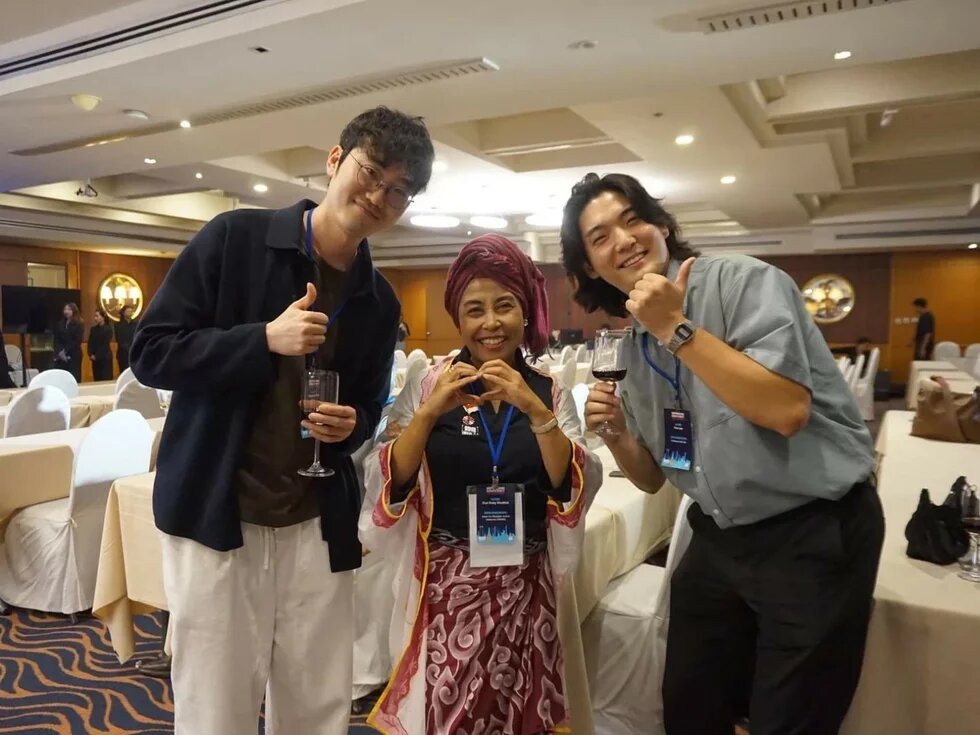
Last October, with support from the Heinrich Böll Foundation, I attended the Asia Democracy Assembly held in Bangkok. Thailand has long felt like a second home to me, so the chance to speak about “Feminism with Him” in a space filled with democracy activists from across Asia still feels vivid. After returning from this short but intense five-day trip—my first work-related trip abroad—I found myself reflecting on a few things.

Facing the “Heungseon Daewongun[1]” Within Me
Even as the K-culture wave swept across the world, I had intentionally distanced myself from it. I didn’t want to get swept up in excessive nationalism, and part of me doubted that Korea’s global popularity was entirely genuine. Looking back, that attitude itself felt like a kind of “inner Heungseon Daewongun”—a small-island mindset that only narrowed my world.
One moment at the Assembly captured this shift: the DJ at a networking party suddenly played “March for the Beloved.[2]” Hearing the anthem of Korea’s democracy movement in a room full of international activists felt strange and overwhelming at the same time. It reminded me that the world is already exchanging histories and cultures at an incredible pace—and that we, too, should be sending people, sharing resources, and contributing our experiences more actively.
What Does It Mean to Be “Globally Attuned”?
The first wall I hit was the English-language barrier. I had always known I needed to study English but kept putting it off, joking that “some genius in the engineering world will fix everything with translation AI soon.” But of course, such tools would never be built with someone like me in mind. So here I am now, once again opening my English-learning app, blaming my past self.
But the bigger issue wasn’t English itself—it was the lack of a “global sensibility.” That became clear the moment the first session began. In a hall of more than 100 people, audience members immediately raised their hands after each presentation, walking up to the mic to ask confident, thoughtful questions. It was a kind of democratic ease—“I belong in this room”—that is hard to imagine in Korea.
Throughout the event, people casually exchanged small talk in the hallways, shared experiences at networking events, and carried conversations effortlessly. Watching them, I wondered: How do introverts survive in a world like this?
Or, more importantly: How do people like me—comfortable in Korea’s “quiet observer mode”—learn to belong in this flow?
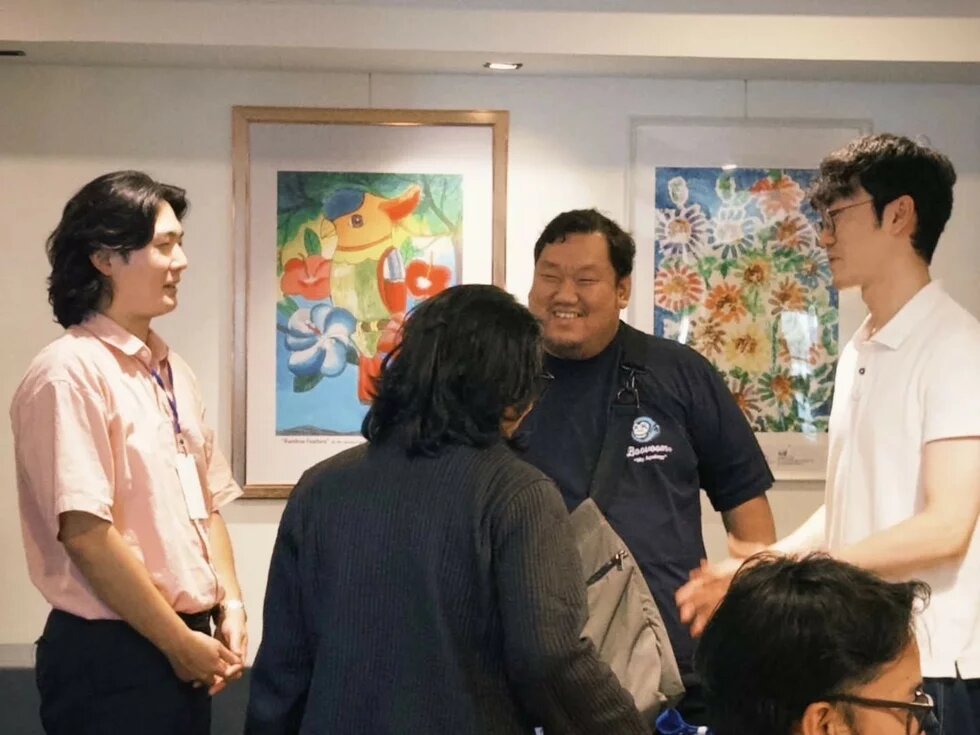
Small moments between sessions—simple greetings, brief conversations—ended up teaching me as much as the formal presentations. In Korea, this culture of “light connection” is far from natural. Eye contact and a friendly smile, or a few words of small talk, are rare. I’ve avoided them most of my life.
But this time, I tried something different. I made an effort to make eye contact, say hello, ask about someone’s role or interests. These weren’t deep conversations—just ordinary, friendly exchanges. And yet, they subtly changed the atmosphere around me. My expression softened, people smiled back, and I felt myself becoming a more open person.
It struck me: these tiny habits, accumulated over time, could quietly change the world. It was one of the most practical lessons I took home.
The World Is Big, and Democracy Has Many Frontlines
My own world had been small—safe, but small. Coming from a society where democracy feels like a given, Korea’s recent near–martial law situation had felt shocking and urgent. Yet in Thailand, where governments change multiple times within a year and parties disappear overnight, even my sense of crisis felt like a kind of privilege.
Hearing directly from people affected by the Rohingya refugee crisis, by violence in Palestine—stories I had previously encountered only through distant news—made me realize how much I had assumed I understood, without truly understanding.
Still, I felt there is something we can contribute. During our session on “Feminism and Men’s Engagement,” activists from several countries responded with strong interest. But I could also sense a kind of hesitation—“Is this possible in our context?”—and that question lingered with me.
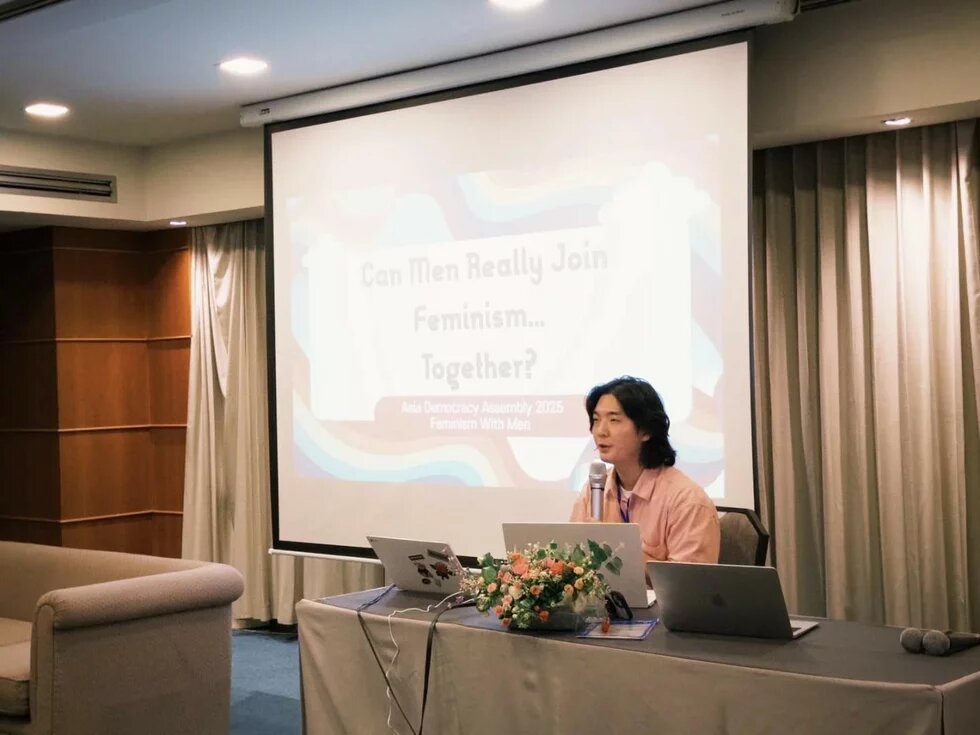
Maybe it’s time to take these conversations beyond Korea. Not through one-way presentations, but through interactive, democratic sessions where participants bring their own experiences. Sharing Korea’s experiments—both successes and failures—might help build networks with activists facing similar challenges. Perhaps such small attempts could be our first contribution to global civil society.
Sitting on the plane home, I thought: for a first overseas work trip, this was a pretty good start.
More than anything, I came back with renewed energy—and a desire to live a little more boldly, beyond the borders of my small world.