

How do perceptions surrounding RUN/OUT participants and sexual minority politics connect, and where do they diverge?
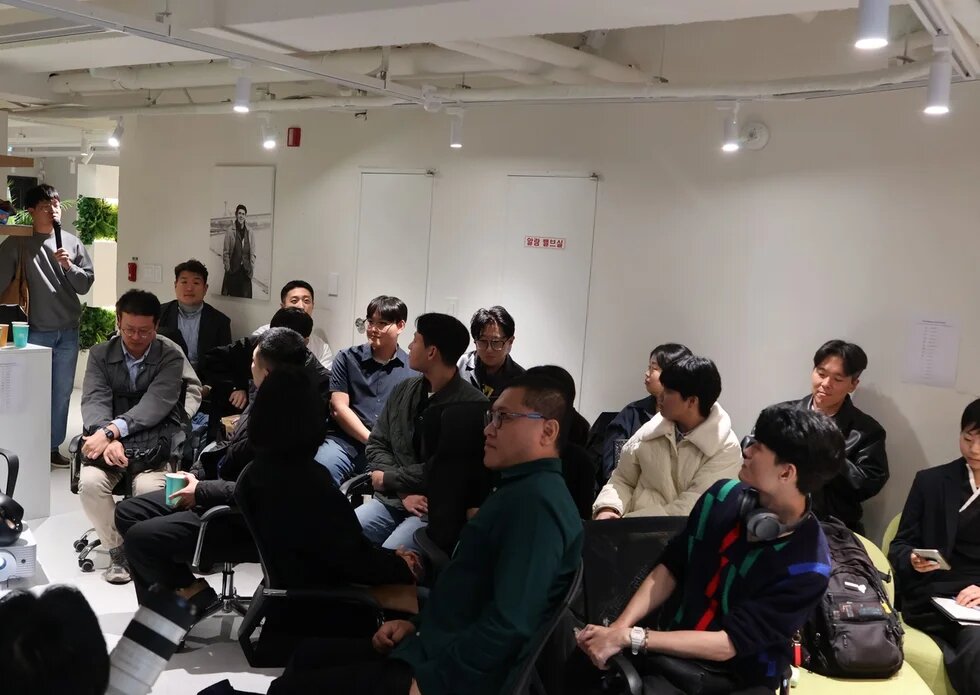
From September 2025 to January 2026, the LGBTQ+ political participation project RUN/OUT was conducted over four sessions, bringing together a total of 128 participants. Who took part in this project, and how do they perceive political participation? As the pilot program came to a close, we conducted a short survey. Drawing on the survey results and the RUN/OUT experience, we take an exploratory approach to examining how perceptions of LGBTQ+ politics are formed.

|
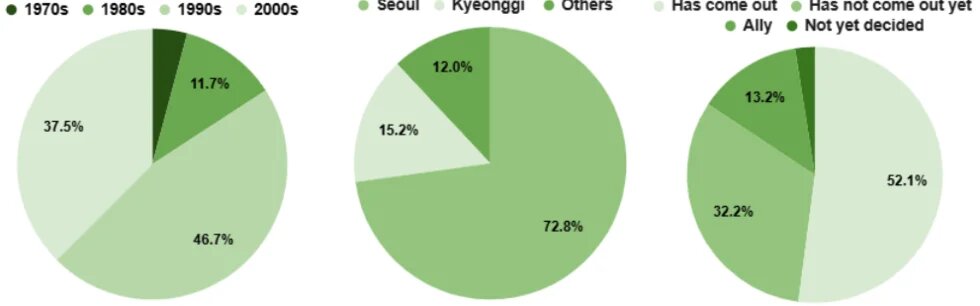
Before turning to a more in-depth analysis, let us briefly summarize the key characteristics of the respondents. RUN/OUT participants have an average birth year of 1992, with a majority born after the 1980s, indicating that the group is largely composed of a relatively young generation. Geographically, participants are concentrated in the Seoul metropolitan area, though some participation from non-metropolitan regions is also evident.
The 128 participants in RUN/OUT do not form a group concentrated within a single political party, rather, they constitute an emerging political network where individuals with diverse political trajectories and experiences intersect. The distribution of party affiliation marked by a large proportion of independents alongside participants from both progressive and major parties suggests that LGBTQ+ political participation is not confined to a particular ideological camp. Participants are also situated at different stages of political engagement, ranging from a small number considering candidacy to a larger group engaging as campaigners, supporters, or observers, collectively forming a broader political ecosystem. Accordingly, LGBTQ+ politics is understood not as a single, fixed concept but as a multidimensional one encompassing policy, representation, and the expansion of democracy. 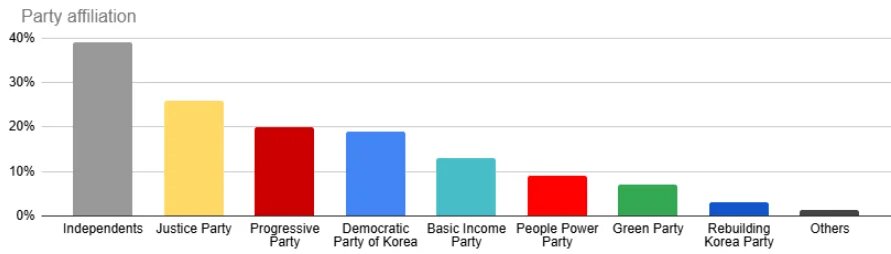
|
This survey explored how participants perceive and what they expect from LGBTQ+ politics. For many, LGBTQ+ politics is primarily understood as a process of restoring rights and driving institutional change, with a strong emphasis on the formalization of rights through law and public policy. At the same time, some participants viewed it as a politics of visibility, in which coming out and expressing one’s identity serve to assert social presence and generate symbolic meaning. However, there was also a shared recognition that building political trust and relationships is more important than the act of disclosure itself. Others, meanwhile, understood LGBTQ+ politics not as a distinct or exceptional domain, but as a natural extension of democratic representation.
Taken together, these findings suggest that LGBTQ+ politics is a multi-layered field in which three perspectives coexist institutional change, identity visibility, and the expansion of representation. More broadly, this indicates that LGBTQ+ politics is not formed solely through the emergence of particular individuals or symbolic events, but rather through the interaction of political opportunity structures, broader social conditions, and the collective experiences of the community. At the same time, the findings point to a key challenge facing LGBTQ+ politics today: not a lack of interest, but a lack of enabling conditions that make entry into the political sphere possible.
The following section examines in greater detail how these different understandings of LGBTQ+ politics intersect and diverge.
How Are Perceptions of LGBTQ+ Politics Connected?
First, RUN/OUT participants’ perceptions of political participation appear to follow a stepwise structure: political interest → imaginability of candidacy → intention to run for office. Participants with higher levels of interest in politics tended to more concretely imagine scenarios in which they themselves or people around them would run for election. This suggests that as individuals develop greater political awareness and access to information, political participation increasingly comes to be perceived as a possibility connected to one’s own life.
However, political interest does not translate directly into an intention to run for office. While the overall level of political interest among participants was relatively high, responses at the stage of candidacy intention were largely limited to forms of engagement such as participating in campaigns or supporting political activities. In other words, a certain distance still persists between an interest in politics and actual entry into the political arena.
By contrast, the variable most strongly associated with intention to run for office was the imaginability of candidacy. Participants who reported that they could realistically imagine themselves or people around them running for election were more likely to consider candidacy and to demonstrate higher levels of political engagement.
Participants who located the possibility of LGBTQ+ politics in “being openly visible as one is” also tended to view its emergence as rooted in individual acts of decision, such as personal courage or coming out. Conversely, those who understood the beginnings of LGBTQ+ politics in terms of individual decision-making and political visibility were likewise more inclined to perceive its possibilities as arising through forms of openness and visibility.
Furthermore, the more participants were able to realistically imagine running for office, the more likely they were to interpret the starting point of LGBTQ+ politics as lying closer to individual decision-making. At the same time, those who viewed the origins of LGBTQ+ politics in terms of individual resolve also tended to imagine electoral candidacy as a more concrete and attainable possibility. This suggests that the very process of imagining political participation is closely intertwined with the question of “identity-expressive political participation.”
Finally, participants who regarded LGBTQ+ politics as emerging from individual courage and decision-making were more likely to emphasize the importance of individual breakthroughs and the emergence of exceptional figures in the process of electoral success. In contrast, those who viewed electoral outcomes as shaped by the accumulation of collective experience and memory were more likely to understand the beginnings of politics in terms of social conditions and community-based foundations rather than individual agency.
How Is LGBTQ+ Politics Strategically Differentiated?
A composite analysis of RUN/OUT participants’ survey responses (focusing on key variables such as interest in political participation, imaginability of candidacy, perceived starting conditions of politics, understandings of visibility, and conditions for electoral success) reveals a tendency for participants to cluster into three distinct groups.
The first group can be described as the “proactive breakthrough” type. This group exhibits the highest levels of interest in political activity and the strongest capacity to imagine candidacy. They also show a pronounced tendency to locate the possibility of LGBTQ+ politics in “being openly visible as one is,” and the proportion of participants who have come out is higher than in other groups. Some participants in this group are also actively involved in political party activities. This group can be seen as believing that the emergence of LGBTQ+ politicians and their breakthrough into political space can open up subsequent political pathways.
The second group can be characterized as the “structural–ecosystem” type. While this group also demonstrates relatively high levels of political interest and imaginability of candidacy, it is distinguished by its tendency to understand the formation of LGBTQ+ politics not through individual symbolic breakthroughs, but through social conditions, institutional environments, and the accumulation of collective experience. Responses emphasizing legal and institutional reform, as well as shifts in social attitudes, as key conditions for an LGBTQ+-inclusive society are particularly prominent in this group. This reflects a perspective that views political participation not as an individual event, but as a matter of long-term foundation building and the development of a political ecosystem.
The third group can be described as the “safety-oriented observer” type. Compared to the other groups, this group shows lower levels of interest in political activity and a weaker capacity to imagine candidacy, as well as relatively limited connections to political party organizations. However, this does not indicate indifference to LGBTQ+ politics. Rather, there is a notable degree of agreement with the idea that LGBTQ+ politicians should represent the community, as well as with the need for institutional change. Taken together, this group can be understood less as immediate actors in political participation and more as a potential support base that is waiting for the emergence of sufficient social safety and enabling conditions for engagement.
Taken together, these three groups suggest that LGBTQ+ politics in South Korea, as reflected in the perceptions of RUN/OUT participants, is a dynamic political formation that is gradually taking shape through the intersection of groups with differing strategies and experiences.
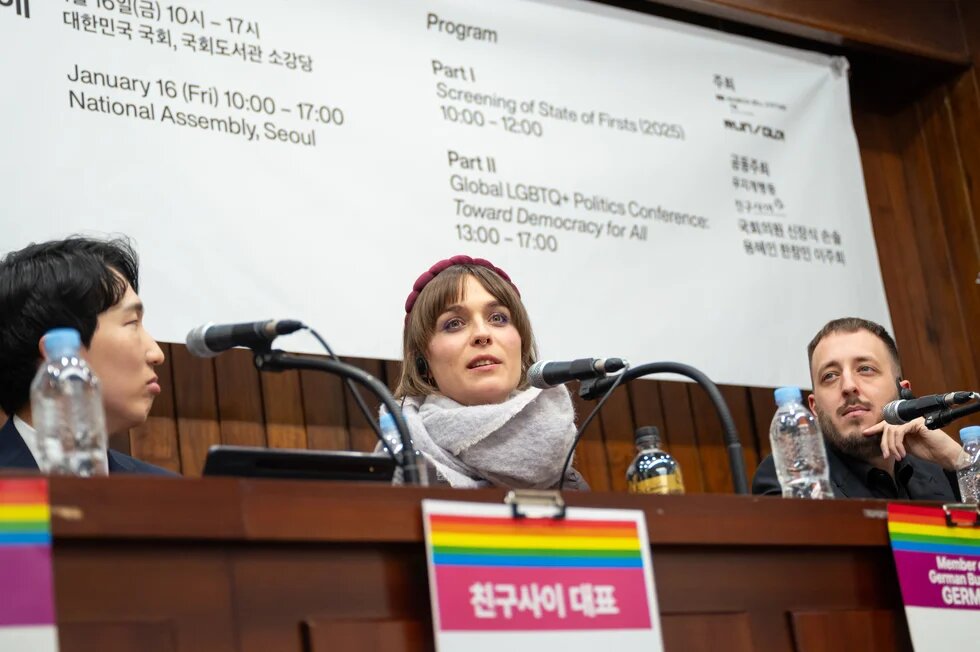
RUN/OUT at a Crossroads: Building Pathways, Not Just Candidates
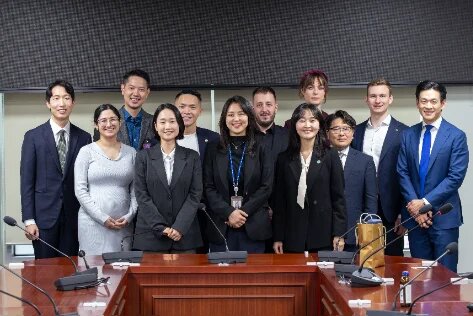
Many of the RUN/OUT participants stood not so much as “immediate candidates,” but rather in roles that contribute to the broader political process(supporting campaigns, developing policy, organizing, and building support bases). In this sense, the group encountered by RUN/OUT was less a conventional “pool of candidates” and more an emergent political ecosystem, in which a range of roles that enable candidacy intersect and begin to take shape within a shared space. This suggests that RUN/OUT is not simply a program aimed at producing individual political candidates, but rather a space in which diverse roles and networks surrounding political participation are formed. Political participation, after all, is not constituted by candidates alone, but through the interplay of multiple actors who support and collectively shape the political process.
The critical turning point lies less in candidacy itself than in the moment when running for office becomes imaginable as a “realistic option” within one’s life. While interest in politics may be widely distributed, the stage at which electoral candidacy is imagined as a concrete, life-connected possibility is far narrower and more specific. It is precisely at this point that political participation begins to move beyond the level of interest or attitude and toward the realm of actionable possibility.
Another key insight is that participants’ understandings of LGBTQ+ politics do not converge into a simple narrative of “individual heroic breakthrough.” While some participants viewed LGBTQ+ politics as beginning through individual courage, coming out, and political visibility, many also recognized that meaningful political change requires the convergence of shifts in social attitudes, institutional conditions, and the accumulation of collective experience. This reveals the simultaneous presence of two distinct yet interconnected layers in the formation of LGBTQ+ politics: one operating prior to candidacy where support bases, networks, and diverse political roles are formed and another in which early candidates begin to emerge upon that foundation.
In retrospect, what RUN/OUT has encountered over the past six months may be understood as a process of recognizing that LGBTQ+ politics does not arise from the heroic breakthrough of a single individual, but from the gradual co-development of the conditions and networks that make such breakthroughs possible. Representation is not produced by declaration alone. As the survey findings suggest, LGBTQ+ politics begins at the intersection of visibility and safety, individual decision and collective accumulation. Beyond interpreting LGBTQ+ politics through the lens of individual heroism, the success of RUN/OUT ultimately depends on whether it can help construct reproducible pathways of political participation for the LGBTQ+ community. The more pressing question, therefore, is not “who runs first,” but how to create the conditions under which many can move forward together.
RUN/OUT is not simply a program for producing candidates, but a space that reveals an emergent political ecosystem where diverse roles and networks enabling participation take shape. The critical turning point lies not in candidacy itself, but in the moment it becomes imaginable as a realistic option in one’s life made possible not only by individual courage, but by the accumulation of social conditions and collective experience. By gathering fragments of interest and courage among LGBTQ+ individuals, RUN/OUT seeks to build the foundations for expanding rights, experimenting with politics as both a tool and a space for this process.
Author: Jaehoon Jung (RUN/OUT Project Lead )