

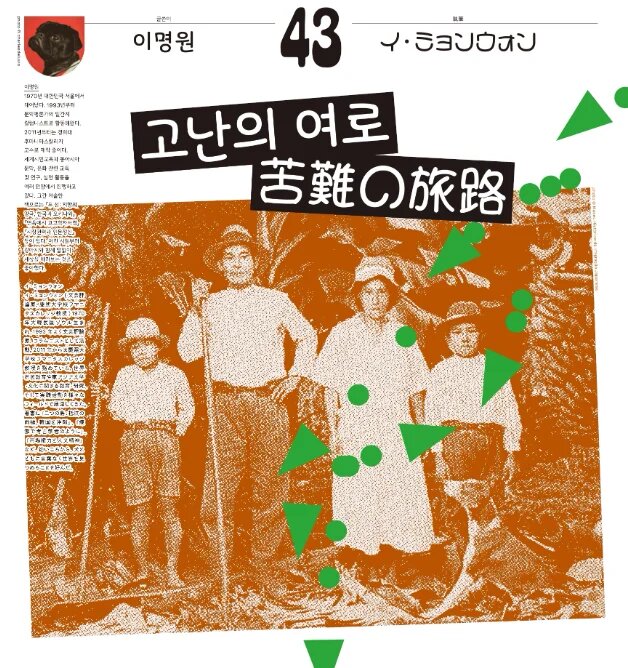
Once an independent kingdom, Okinawa was absorbed into the Japanese Empire and later devastated by war and U.S. occupation. Amid poverty, dispossession, and discrimination, many Okinawans sought survival through migration to Brazil, where they built new communities while preserving their language, traditions, and mutual-aid culture. Tracing this history of migration, the text explores the intersections of colonialism, war, diaspora, matriarchal community life, and “long-distance nationalism.” It reveals how Okinawan identity endured even while Okinawans were classified as Japanese, leaving behind memories and struggles that continue to resonate across generations and continents.
Introduction: Okinawa 1429-1920
For around 450 years Okinawa existed as the Ryukyu Kingdom (琉球國), as an independent state with its own traditions and culture after the establishment of a unified kingdom in 1429. In 1879, however, it lost its sovereignty to the Japanese Empire and became what is now Okinawa Prefecture. When the Pacific War between Japan and the United States began in December 1941 and Japan was defeated in 1945, Okinawa entered a regime of U.S. occupation and administration until 1972, when the US administrative authority returned to Japan.
As Okinawans carry this complex historical background, they are Japanese in nationality, yet take strong pride in a distinct cultural identity as Okinawans (or as the Ryukyuan people). After the Ryukyu Kingdom was incorporated into Japan, Japan introduced a household-head system (hoju 戶主) and a system of private landownership. Under the Ryukyu Kingdom, most common people—excluding the ruling strata of royalty and the gentry—had neither household registration nor the notion of lineage groups (moonjoong 門中). Family life was strongly shaped by a mother-centred matriarchy, and village agriculture was based on shared landholding as the norm. Accordingly, among the common people, there was neither private landownership nor money trading for goods in their economy.
With the introduction of private landownership and a household-head system grounded in the Japanese-style of primogeniture inheritance, many landless common people— excluding the ruling class—lost the basis of their livelihood. The Japanese government imposed sugarcane cultivation on Okinawa as a national policy suited to its subtropical climate. At the time, sugar was expected to be a highly marketable cash crop, traded at high prices. But as the Great Depression and the continuing collapse of sugar prices unfolded through the late 1920s, Okinawa’s economy and everyday livelihoods neared ruin. Desperate people who could not secure food sometimes used the toxic sago palm (sotetsu 蘇鐵) as a food source—and deaths became frequent. Okinawa calls this period of extreme poverty “sotetsu jigoku,” or “the sago-palm hell.”
As the Okinawan economy had sunk into a chronic near-death state, labour migration to mainland Japan—or labour emigration overseas—became, for ordinary people, a crucial option for survival. This is how Okinawa came to be known as an “island of migration.”
From Okinawa to Brazil 1908-1990
Let us now turn to the “history of migration to Brazil.” On 18 June 1908, the Kasato Maru carrier, which departed from Kobe, arrived after 51 days at sea at the Port of Santos in São Paulo State, Brazil, disembarking 781 Japanese migrants. Many passengers were from Okinawa Prefecture and the neighbouring Kagoshima Prefecture.
From then until 1941, a total of 188,209 people migrated from Japan to Brazil. Immediately after the outbreak of the Asia–Pacific War in 1941, the Brazilian government severed diplomatic relations with Japan and migration to Brazil was suspended. It resumed after the war, from 1949.
From 1944, in the final phase of the Asia–Pacific War, Okinawa became the site of large-scale ground battles between U.S. and Japanese forces, and suffered devastating destruction. After Japan’s defeat in the Battle of Okinawa, the islands rapidly turned into an “island of military bases” under U.S. occupation. With homes destroyed and land confiscated by the U.S. military, Okinawan people once again sought survival through overseas migration.
Between 1948 and 1990, the number of Okinawans who undertook migration to Brazil totalled 9,494. In the same period, 3,894 migrated to Argentina, 3,448 to Bolivia, and 733 to Peru. In other words, a confirmed total of 17,726 people from Okinawa Prefecture migrated overseas, primarily to South America. That migration was concentrated in the 1950s and 1960s shows how severe the struggle for survival was for ordinary Okinawans during the postwar period under U.S. occupation.
Okinawans among the Japanese community in Brazil
The total number of people of Japanese descent currently living in Brazil is estimated at roughly 1.8 million. If around 10% of them—about 180,000—are of Okinawan descent, then Okinawa is the prefecture that has produced the largest number of overseas emigrants in Japan, and, among them, the largest number of migrants to Brazil.
Like other Japanese immigrants, Okinawans in Brazil worked as agricultural labourers on coffee, cotton, and sugarcane plantations across the country. Some also accumulated substantial wealth by exporting products to the United States through beekeeping and peppermint cultivation. In time, those who had built up a certain level of assets moved to major cities such as São Paulo and Rio de Janeiro, becoming small- and medium-sized business owners or self-employed. As also seen among early Okinawan immigrant communities in Hawai‘i, Okinawan migration often took place in family units. Even when someone initially arrived alone as a “contract migrant,” they later reunited with family through “invited migration,” and in that process continued to maintain Okinawan traditions, culture, and language within Brazil.
Unlike many Asian, Latin American, or African immigrant groups, Japanese immigrants were regarded as “honorary whites,” and were relatively less exposed to racial discrimination. Yet it is also true that within the Japanese community there were subtle ethnic and cultural tensions between migrants from Japan’s mainland (often called ”Yamato-nchu”) and Okinawan migrants (often called “Uchina-nchu”). For Okinawans, the Ryukyu Kingdom’s distinct 450-year history and culture remained, even though it was ultimately annexed by force into Japan. For that reason, patterns of discrimination against Koreans and Okinawans that existed in mainland Japan were not completely eradicated even within Brazil’s immigrant society—though, over time, they gradually faded.
The Okinawan–Brazil identity
Brazil’s Okinawan immigrant community, while composed of Japanese nationals, continued to sustain Okinawan traditions. That organisations such as Okinawan prefectural associations (called “Kenjinkai”) were established early in 1920, shows the strength of this communal consciousness.
The Okinawan traditional ways of life became cultural resources that helped people endure harsh labour in Brazil: such as the Okinawan ancestral rites the singing and transmission of Ryukyuan folk songs accompanied by the “sanshin” (a traditional Okinawan instrument and the prototype of the Japanese “shamisen”); the spirit of “yuimaru” (mutual aid) a distinctive Okinawan communal ethic; and regular exchanges through “moai” (rotating savings/association meetings), among other practices. In particular, Okinawans placed importance on women’s spiritual power and their management of family life.
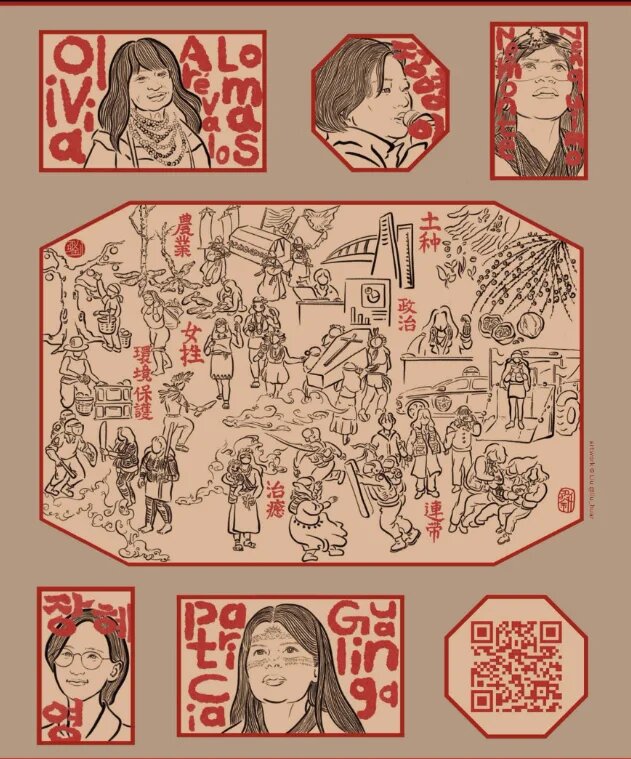
In Okinawa’s traditional religious worldview, women were regarded as shamans who spiritually prevented and healed dangers threatening the family and community. In the past, Okinawa’s royal court centrally organised a state-shaman institution known as “noro” (with the king’s elder or younger sister serving as the leader of the shamans) and within village communities, folk shamans called “yuta” presided over matters of fortune and misfortune. All of these shamans were women.
Even though “noro” and “yuta” did not exist as formal institutions within Brazil’s immigrant society in the modern era, women nonetheless served a central role in the family and the community’s mental and spiritual “management,” helping immigrant households recover from the pain and danger of labour and from psychological and physical helplessness. In this sense, Okinawan family communities displayed a stability and resilience rooted in a matriarchal household order that differed in certain respects from the patriarchal system of mainland Japan, which came under strong influence from Confucian norms, after the Meiji Restoration.
Conclusion: Post war “long-distance” nationalism
Finally, I will close with one tragic episode involving Japanese immigrants in Brazil after Japan’s defeat. During the Pacific War, Brazil belonged to the Allied powers. After Japan’s 1941 attack on Pearl Harbor in Hawai‘i, the Brazilian government prohibited Japanese immigrants from using the Japanese language, and also banned Japanese-language newspapers and Japanese-language radio broadcasting in Brazil. As a result, although Japan was officially defeated in September 1945, that fact did not reach Brazil’s immigrant communities.
Instead, nationalist Japanese intellectuals in Brazil continually circulated—in the form of Japanese-language leaflets—the rumour that Japan had not only won the war, but that before long Japan’s fleet would arrive to seize Brazil, an enemy nation, by force. People who held such convictions were called the “victory faction” or the “belief faction.” Tragically, about 90% of Brazil’s Japanese immigrant community sincerely believed these rumours at the time.
Meanwhile, there was also a group—around 10%—who learned of Japan’s defeat through local Portuguese-language newspapers. They conveyed to the community that it was not true Japan had won; rather, Japan had been decisively defeated, and Japan’s territory had been reduced to Kyushu, Honshu, Shikoku, and Hokkaido. But they were called the “defeat faction” or the “recognition faction.”
The problem was that until the mid-1950s—long after the war had ended—the majority of Japanese immigrants in Brazil not only denied Japan’s defeat, but also regarded those who insisted on acknowledging it, the “reality-recognition faction,” as traitors to the nation. As this sentiment radicalised, right-wing youth formed “special-attack units” and repeatedly assassinated leading figures of the recognition faction—those who had spoken the truth of Japan’s defeat. This was a tragedy of an immigrant society cut off from information from the homeland.
After the defeat, Japan rapidly moved away from its pre-war militarism and transitioned into a democratic society. Yet for a considerable period, Japanese immigrant society in that faraway land refused to believe Japan had lost. Seen another way, one could say that Japanese immigrant society in Brazil was marked by an intense “long-distance nationalism”.